Abortion rights referendums are winning – with state-by-state battles over rights replacing national debate

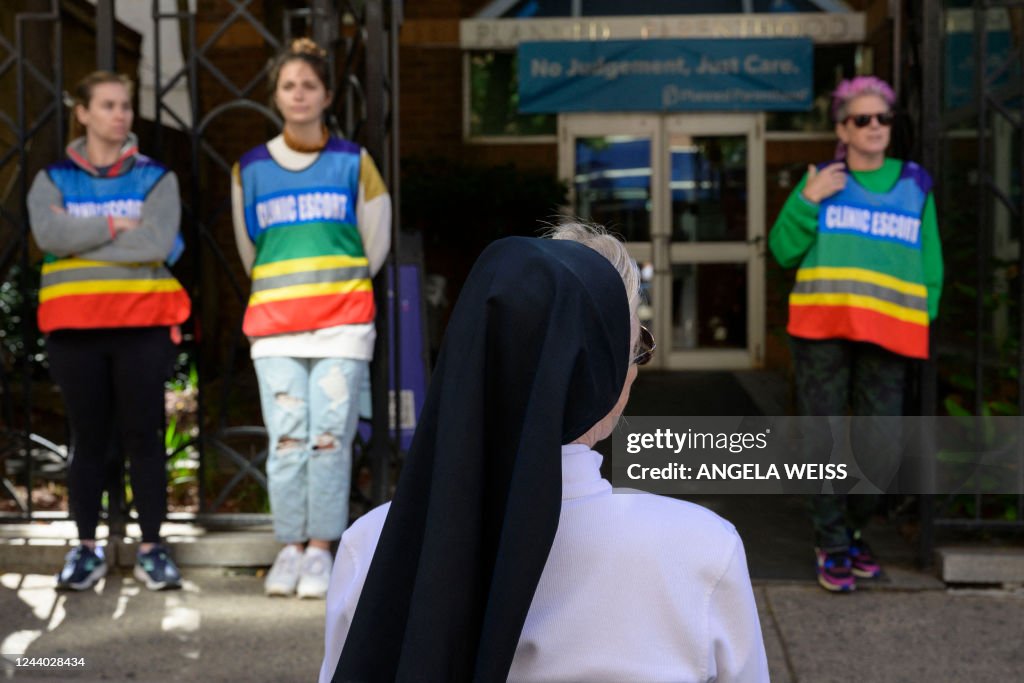
An anti-abortion activist prays in front of a Planned Parenthood center in Philadelphia in September 2022. Angela Weiss/AFP via Getty Images
Rachel Rebouche, Temple University

The abortion landscape in the U.S. has been upended over the past five months, as many clinics offering the procedure have closed and people have traveled across state borders to obtain abortions where it remains legal. The percentage of people getting legal abortions has also dropped.

Division over abortion did not start when the Supreme Court abandoned constitutional protection for the right to have an abortion in Dobbs v. Jackson Women’s Health Organization in June 2022 – but the decision did prompt referendums at the state level about whether abortion should be permitted or not.

Eighteen states, from Alaska and Arizona to Wyoming and Washington, allow voters to directly amend a state constitution through ballot measures.

Ballot measures – or referendums – could show the power of people’s direct vote in determining abortion law at the state level.

During the November 2022 midterms, voters added protection for the right to get an abortion to constitutions in California, Vermont and Michigan. Kentucky voters were asked a reverse version of this question – whether the state constitution should bar abortions. They said no.

Kentucky’s vote is similar to an August 2022 referendum on abortion that was held in Kansas. Fifty-nine percent of people in Kansas – a state with a history of anti-abortion policies and activism – voted to keep state constitutional protection of abortion rights.

As a scholar of reproductive health and justice, I think the referendum results in places often considered red or purple states, such as Michigan, Kentucky and Kansas, demonstrate just how varied and complex abortion beliefs and opinions are in the United States.

Ballot measures, perhaps in the short term, may provide one way to protect or restore the ability to get an abortion in states where the politics tend to skew conservative. Simply put, not all conservatives want to ban abortion.

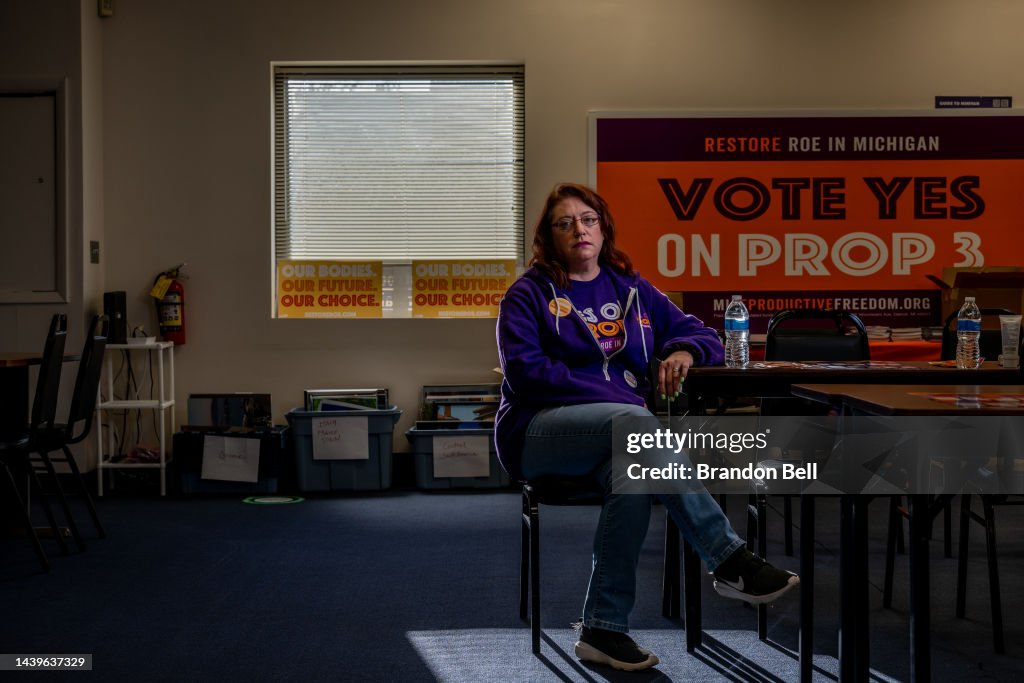
A middle aged woman with brown hair sits on a chair in a room with signs bearing such messages as 'Our bodies, our future, our choice.'
Beth Bowen, a press assistant with the advocacy group Reproductive Freedom for All, prepares to canvass for abortion rights in Dearborn, Mich., in November 2022. Brandon Bell/Getty Images

Legal landscape of abortion

The legal terrain of abortion has changed in the U.S. since Dobbs.

Abortion law is increasingly a state-by-state patchwork in which people can obtain an abortion along the east and west coasts, but people in parts of the South and Midwest are unable to do so in their home states at any point during pregnancy.

Following Dobbs, 17 states have banned abortion before viability, the point at which a fetus can live outside the womb, typically at around 23 or 24 weeks of pregnancy. Thirteen of those states, such as Alabama and Wisconsin, now ban abortion from the earliest moments of pregnancy.

Before Dobbs, 15 states had statutes or constitutional provisions protecting state-based abortion rights. These guarantees ensure that abortion will remain legal in the state no matter what the Supreme Court decides.

Other new state abortion laws

In the past few months, six states have passed so-called shield laws, which seek to protect health care providers from liability for providing legal abortions to out-of-state residents.

Shield laws are not just prophylactic measures. As I have written with co-authors David Cohen and Greer Donley, the emerging legal landscape will be punctuated by conflicting state policies on abortion, particularly as states seek to impose their policy choices as widely as possible, even across state lines. A Missouri bill introduced in the spring of 2022 proposed to do just that by giving private citizens the right to sue anyone who helps a Missouri resident have an abortion – regardless of where the abortion occurs.

Any state seeking to apply its laws outside of state borders may face constitutional problems – the U.S. Constitution guarantees the right to travel and prohibits states from burdening interstate commerce, for example, which could prove to be legal barriers to enforcing laws with extraterritorial effects. But these arguments are largely untested or underdeveloped.

The legislation that states pass post-Dobbs of course reflects differences in opinion about abortion itself. But in some places where abortion has been banned, or restricted, anti-abortion legislators may not reflect their constituents’ beliefs. The recent ballot measures reveal that.

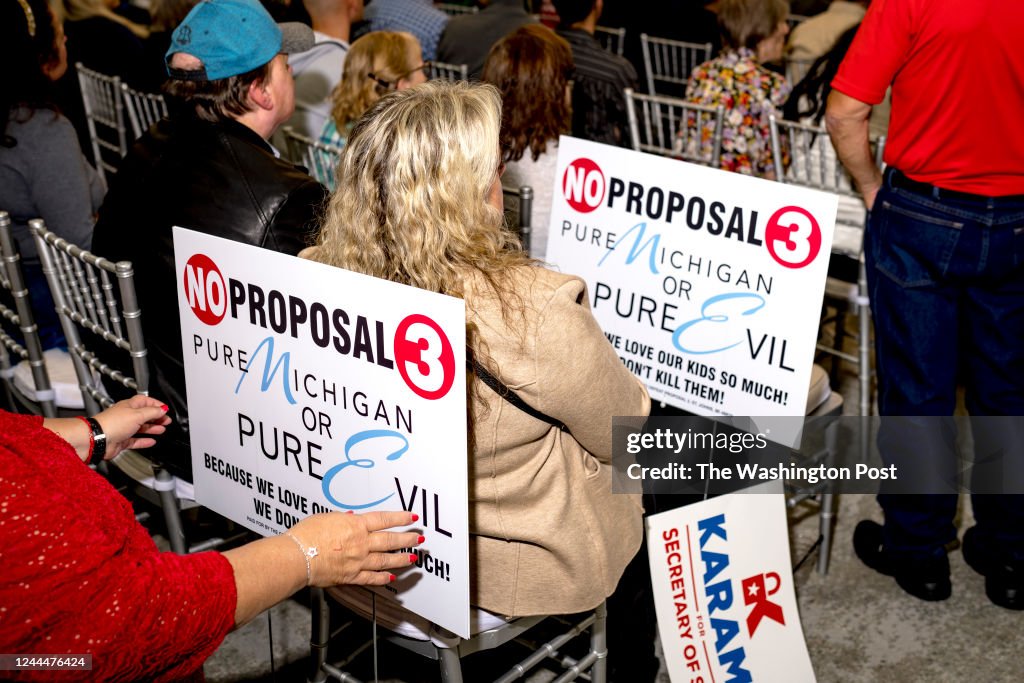
Rows of people sit in chairs, with their backs shown, holding signs that say 'No proposal 3 - Pure Michigan or Pure Evil.'
People voted for Proposition 3 in Michigan on Nov. 8, adding the right to abortion and contraceptive use to the state constitution. Nic Antaya for The Washington Post via Getty Images

Significance of abortion referendums

A September 2022 poll demonstrated that 65% of those Americans surveyed believe Roe’s demise is a “major loss of rights.” That outcome aligns with polling that shows that, in a variety of conservative states, a majority of voters want some or most abortions to remain legal.

In Kentucky, the vote to keep open the possibility of state protection of abortion rights may send the same message as these polls. Ballot initiatives could also override the will of anti-abortion politicians who have had a hold on the issue.

Take the example of Michigan. The referendum passed in the midterm elections extends constitutional protection for abortion in the state, overturning the now enjoined law that bans abortion in the state – a law that has been on the books since 1931.

Faith in ballot measures is a risky, and expensive, proposition. Expensive because, as the Kansas vote demonstrates, groups supporting opposite sides of the question have spent millions to convince voters of their positions. Risky because voting restrictions and gerrymandering may dilute the power of people’s votes in some places.

But votes in Kansas, Kentucky and Michigan might show the ability of abortion-rights advocates to marshal their funding and messaging to take abortion questions away from state legislators and place them in the voting box.The Conversation


Rachel Rebouche, Dean, James E. Beasley Professor of Law, Temple University

This article is republished from The Conversation under a Creative Commons license. Read the original article.


The OPINION TODAY email newsletter is a concise daily rundown of significant new poll results and insightful analysis. It’s FREE. Sign up here: opiniontoday.substack

Republicans, Fear the Young

Stressed and sickened by thoughts of their rights and democracy slipping away, young Americans across gender, racial, geographic and education lines banded together last week to help save the Democrats from what many foresaw as a sizable midterm defeat. If the elections had been decided by voters 45 and older, Republicans would have won the House by an even greater margin and likely taken the Senate. But thanks to young voters (especially the 18-to-29 age group, which had the second-highest turnout in midterm elections in almost 30 years, according to early estimates from Tufts University), Democrats retained the Senate, showing that an alliance of Gen Z and millennial voters answered history’s call to defend democracy. CONTINUED

John Della Volpe (Harvard Kennedy School), New York Times


The OPINION TODAY email newsletter is a concise daily rundown of significant new poll results and insightful analysis. It’s FREE. Sign up here: opiniontoday.substack
Midterm exit polls show that young voters drove Democratic resistance to the ‘red wave’

… In order to better understand how Democrats avoided big losses in the 2022 midterms, this analysis examines Democratic minus Republican (D-R) vote margins using 2022 exit polls data and those of earlier elections compiled by Edison Research. They show that among people voting for House of Representatives candidates, key demographic groups that traditionally favor Democrats (young people, women, racial minorities, and white female college graduates) played a significant role—but only some of these groups showed as strong or stronger a D-R margin than was the case in the 2020 presidential election or previous midterms. Especially notable among these groups were young adults. In contrast, groups long associated with former President Donald Trump’s base (such as older voters and white male non-college graduates) stayed with Republican candidates. …

In short, these midterms revealed Democrats’ strength among new generations of voters and demographic groups that will continue to grow in size, while Republicans continue to do well with older voters and white men without college educations. And while the latter voting bloc continues to decline in size, it is still substantial in many states. The question these results raise, then, is whether the blocs that strongly supported former President Trump in the past will retain enough clout to counter future gains among groups that favored Democrats this time around. CONTINUED

William H. Frey, Brookings Institution


The OPINION TODAY email newsletter is a concise daily rundown of significant new poll results and insightful analysis. It’s FREE. Sign up here: opiniontoday.substack
So You Think You Can Explain The Election

The election is over. The results are (mostly) in. Time to decide what it all means.​ That’s a particularly popular activity in a year when Democrats pulled off something of an upset — their successes going against historical expectations and the popular narrative that suggested Republicans were set to sweep the House and Senate in the midterms. …

I’m not a politics reporter, but the search for election explanations has led me to think about which ones I — a science reporter with an anthropology degree who spends my work days observing the political natives — trust more than others, even as I give all of them a little side-eye.

Politics, I’ve noticed, loves a just-so story. A clear, coherent reason why the zebra got his stripes. But that’s a form of storytelling that isn’t as concerned with scientific accuracy as it is with passing down culturally specific ideas about how people should behave. So what’s a person to do when they care about both? Here are the tips I keep in mind: CONTINUED

Maggie Koerth, FiveThirtyEight


The OPINION TODAY email newsletter is a concise daily rundown of significant new poll results and insightful analysis. It’s FREE. Sign up here: opiniontoday.substack
The GOP did fine with Latino voters. But that wasn’t good enough.

Republicans spent the past two years trying to win over Latino voters. They poured money and manpower into on-the-ground outreach. They recruited Latino candidates. And they focused on economics while staying conservative on social issues – a strategy that Donald Trump used to woo millions of new Latino voters in the 2020 election.

According to exit polls, Republicans retained the progress they made in 2020 without increasing their margin. CONTINUED

David Byler, Washington Post


The OPINION TODAY email newsletter is a concise daily rundown of significant new poll results and insightful analysis. It’s FREE. Sign up here: opiniontoday.substack

Republicans Paid a Price for Overturning Roe. It May Have Been Worth It.

The Republicans’ under-performance in the midterm elections has been described a lot of different ways — a failure, a rebuke, a mistake, etc. — but rarely as a price. That is, however, exactly what happened.

Republicans took a hit at the polls because that’s the price to pay for a major policy gain, the one they got with the Dobbs decision earlier this year eliminating the national right to an abortion. …

The idea that overturning Roe would fuel a backlash shouldn’t have been a surprise; polls had shown that to be an unpopular position for decades. Even many anti-abortion activists were simply advocating for greater restrictions on abortion, not the complete bans that some states have enacted or are working toward. …

No, it wasn’t congressional Republicans who overturned Roe, but voters don’t often distinguish between different branches or levels of government when assigning credit or blame, and casting votes in a midterm election is one of the few opportunities they have to register dissent. Without Roe on the books, the future of abortion access in states across the country was also a live issue, giving voters another chance to weigh in and push back against a destabilizing policy shift. CONTINUED

Seth Masket (U. of Denver), Politico Magazine


The OPINION TODAY email newsletter is a concise daily rundown of significant new poll results and insightful analysis. It’s FREE. Sign up here: opiniontoday.substack